THE POUR OVER GUIDE
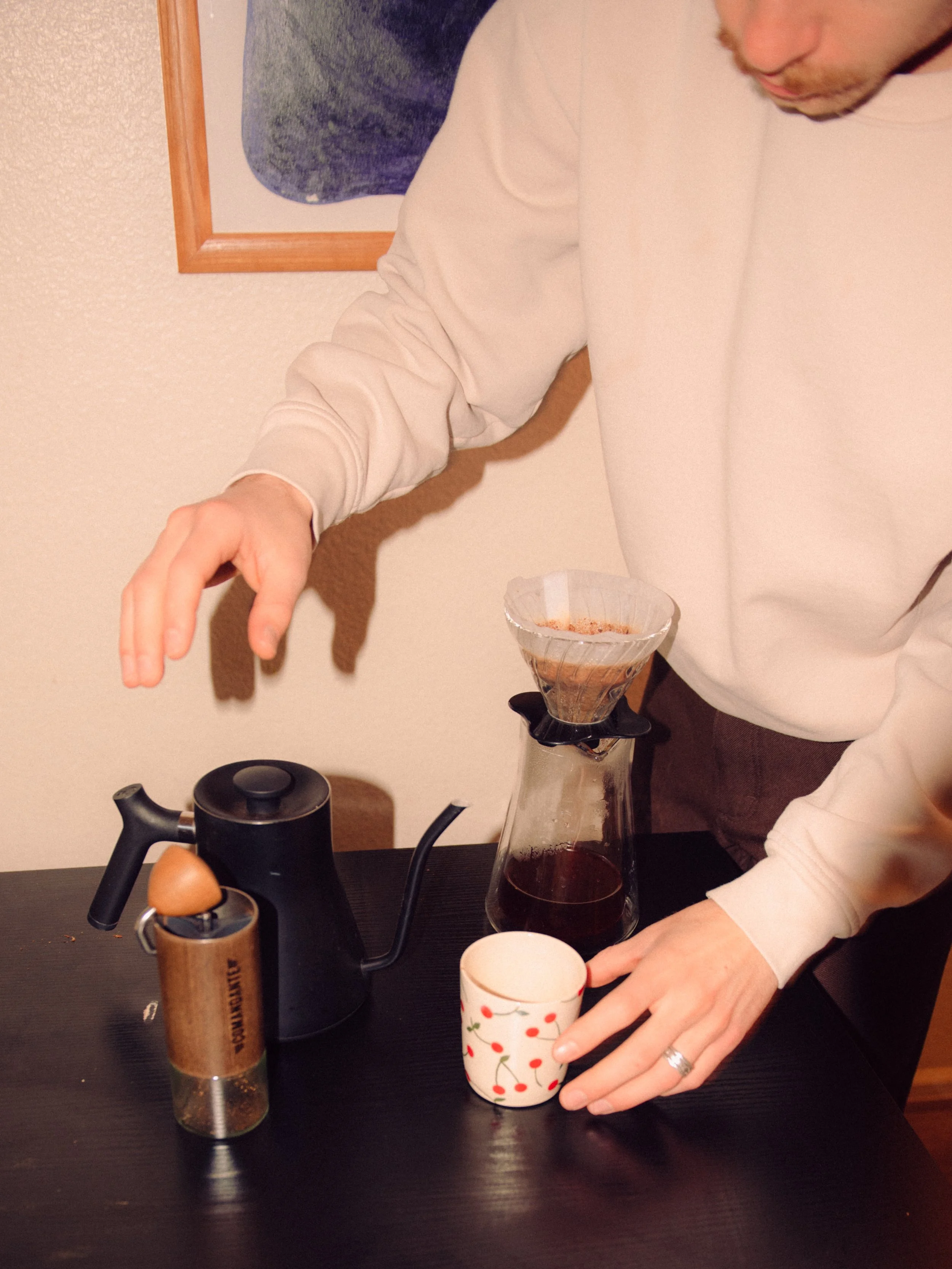
We want you to be the barista hero in your home.
It doesn’t matter how much testing we do, if you don’t get the same results in your cup.
The great news? It doesn’t have to be all that complicated. Let’s get started!
STARTING WITH THE BASICS! Coffee. Water. Grinder.
COFFEE
If you don’t like the coffee you’re drinking, it won’t matter what you do to it—you’ll never be stoked on what ends up in your cup. Pick a roaster that provides high-quality, well-roasted coffee and you’re set to start your brewing journey. Based on the pink bag you have in your hands, you seem to have good taste already ;)
WATER
Minerals help your water hold onto the tasty coffee compounds as it flows through the grounds. Our suggestion? Just use Third Wave Water packets—it takes out the guesswork. If you don’t want to buy water packets all the time, at the very least use a water filter. We’ve found that while it’s not as good as Third Wave Water, a PUR filter can still help you make a very lovely cup of coffee.
GRINDER
Your grinder has a much bigger impact on your coffee’s flavor than any brewer you’ll ever buy. If you need recommendations, we are a email/DM away with a slew of favs.
BONUS!
Rest your coffee! Light-roasted coffee doesn’t usually peak in flavor until about two weeks off roast. If that bag of Kindred you just opened tastes a little harsh, or the flavors aren’t as clear as you hoped, let it rest for a couple of days and see how it improves.
WHAT’S NEXT?
Use a good recipe! There are a lot out there—we’ve tried plenty. We chose this one for the brew guide because it consistently tastes great and is easy to tweak to your preferences and works on a lot of different brewers. Here it is:
• 11-14g coffee
• 200g water (195F)
Pouring structure:
50g pour (0:00)
50g pour (0:30)
50g pour (1:00)
50g pour (1:30)
The coffee should draw down in 2:30-3:00.
AT LAST
Every good cook knows you sometimes need to adjust a recipe to make it work. Here at Kindred, we want brewing to be as simple as possible, and we don’t want you wondering what to change or when.
Here’s a breakdown of what to do if you’re not liking what you’re tasting!
Change your grind size. If the coffee is stalling and won’t drain properly, it can taste bitter and can mute the delicate flavors you’re looking for. Grind coarser to increase the flow rate. If it drains too quickly, it can taste watery and vegetal. Grind finer to slow the flow and increase extraction.
Change your brew ratio. If one flavor is coming through too intensely, try using less coffee. If it tastes weak and the flavors seem flat, brew a stronger ratio by increasing your dose. Start at one end, move to the other, and find what works in between. We like to start with 12g of coffee and adjust until we find what the coffee prefers.
Change the number of pours. Although it’s the last thing we change, it can sometimes make or break a coffee for us. Delicate,
tea-like coffees often taste better with fewer pours. Juicy, fruit-forward coffees often do better with more pours. We always start with our four-pour recipe, but will adjust down to two pours if the coffee isn’t giving what I know it can offer.
We hope this helps to simplify the ever-expanding world of coffee.
What works for us might not work for everyone’s taste but WE SURE LOVE IT.
Cheers!
Santi + Ave